



Adapting to California’s 2025 Motorhome Regulations: How Self-Storage Can Help
What California’s motorhome rules actually say
California’s Advanced Clean Trucks, or ACT, regulation was adopted in 2021 and began with the 2024 model year. It applies to manufacturers of certain medium- and heavy-duty on-road vehicles over 8,500 pounds gross vehicle weight rating and requires an increasing share of their California sales to be zero-emission vehicles. (California Air Resources Board)
That does not mean California has issued a blanket ban on motorhomes. CARB specifically says the ACT regulation does not ban the sale of motorhomes and does not prohibit the registration or operation of diesel-powered vehicles in California. (California Air Resources Board)
That distinction matters. The regulation is real, but the original version of this blog overstated what it does.
Why RV buyers still felt the impact
Even though CARB says ACT is not a ban, RV industry groups say the rule has still created real supply problems. The RV Industry Association has said some chassis manufacturers have told motorhome manufacturers they would not supply internal-combustion chassis for California-bound motorhomes because there are not yet zero-emission chassis designed for many motorhome applications. (rvia.org)
The same RVIA materials also note that attention has focused heavily on larger Class A and Class C coaches, but the issue can reach other motorhomes above 8,500 pounds GVWR too, including many Class B units. (rvia.org)
So the better way to describe the current market is this: California did not simply “ban” motorhomes, but regulation and chassis availability have made some new motorhome purchases harder and more confusing. (California Air Resources Board)
Another rule current owners need to know: Clean Truck Check
For many current owners, the more immediate issue may be Clean Truck Check. CARB says this program can apply to California-registered non-gasoline motorhomes over 14,000 pounds GVWR. If a motorhome falls into that category, owners may need to complete reporting, pay annual compliance fees, and submit annual emissions testing. CARB also warns that noncompliance can lead to a DMV registration hold. (California Air Resources Board)
That means some owners are dealing with more than purchase questions. They are also dealing with ongoing compliance and documentation.
Why the 7,500-mile rule keeps coming up
Another detail that often surfaces in California motorhome discussions is the 7,500-mile threshold. California DMV says a noncertified vehicle generally cannot be registered to a California resident if it has less than 7,500 miles on the odometer, unless an exemption applies. (California DMV)
RVIA materials also point to that threshold when discussing how California treats “new” motorhomes in this regulatory context. (rvia.org)
For buyers, the takeaway is simple: before purchasing any motorhome, confirm registration eligibility, emissions labeling, and California compliance details with the seller and the appropriate agencies. That is especially important for out-of-state purchases.
What motorhome owners should do before buying or storing
If you own a motorhome now, or you are thinking about buying one, a few steps can save time and money:
- Check the motorhome’s GVWR and fuel type, because different rules can apply at 8,500 pounds and 14,000 pounds. (rvia.org)
- Verify whether the vehicle is California-certified and whether the 7,500-mile rule could affect registration. (California DMV)
- Ask whether the chassis, engine labeling, and paperwork are compliant for California registration. (rvia.org)
- Make a storage plan if the vehicle will sit for part of the year, during repairs, or while you sort out paperwork.
Why storage matters more when rules get more complicated
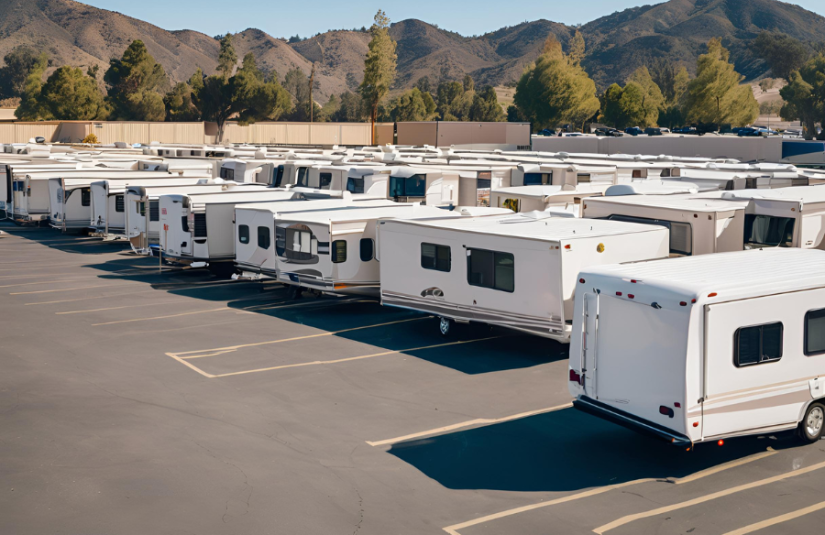
When regulations, registration questions, and supply issues make ownership more complicated, protecting the RV you already have becomes even more important. Good storage helps reduce wear during downtime, keeps a large vehicle off crowded streets and driveways, and gives owners a more practical place to keep a motorhome between trips.
That is where Derrel’s Mini Storage can fit into the conversation. If you are comparing options, you can start with Derrel’s overview of storage types and then review its dedicated pages for RV storage, vehicle storage, and boat storage if you store more than one seasonal vehicle.
If you are not sure how much space you need, Derrel’s storage unit size guide can help you plan ahead. If you want broader organization advice before moving items in or out of storage, the company’s storage tips and company tips page is another useful resource.
Some renters need more than RV space alone. Derrel’s also offers information for personal storage and corporate storage, which can help when a household or business is juggling overflow items, documents, tools, or trip-related equipment alongside a large vehicle.
Find a Derrel’s location near you
Motorhome and vehicle owners can explore nearby options by market, including Fresno storage units, Bakersfield storage units, Clovis storage units, Visalia storage units, Tulare storage units, and Modesto storage units.
And if you already rent with Derrel’s, the online payment access page gives you a convenient way to manage payments without making an extra trip.
California’s motorhome landscape is changing, but it is still important to separate rumor from reality. The ACT rule did not create a simple statewide ban on motorhomes. What it did create, according to CARB and RV industry sources, is a more complicated environment involving manufacturer requirements, chassis availability, and compliance questions that owners and buyers need to take seriously. (California Air Resources Board) For many owners, the smartest move now is not panic. It is preparation. Understand the rules that apply to your vehicle, protect the motorhome you already own, and choose a storage plan that makes ownership easier while California’s regulatory environment continues to evolve.


