


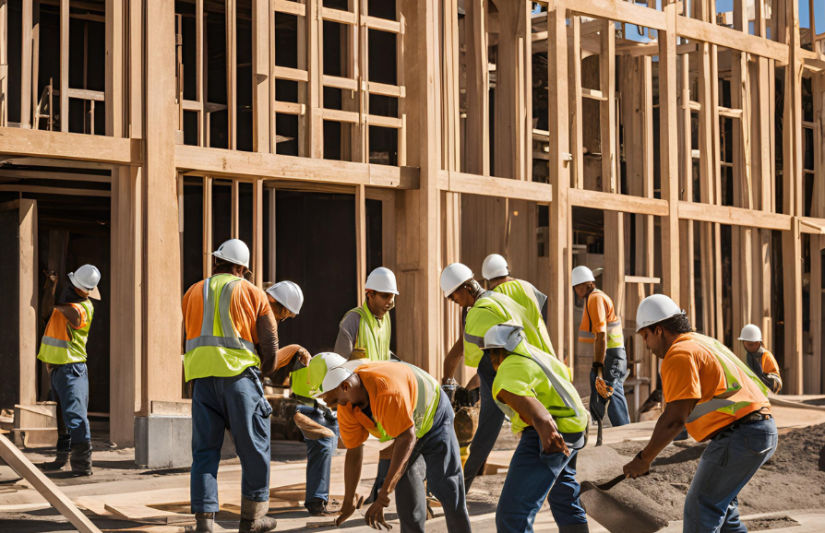


Merced's Getting A Makeover!
Merced’s growth story is becoming easier to see
Merced has been talked about as a city with long-term potential for years, but the difference now is that more of that potential is tied to visible infrastructure work. Instead of relying on broad promises, the city is moving through real projects tied to transportation, road conditions, pedestrian access, and long-range planning for future development. (City of Merced)
That matters because infrastructure often changes how a city feels before it changes the numbers on a spreadsheet. When roads are improved, station areas are planned, and new housing and commercial districts are prepared for expansion, Merced becomes easier to picture as a place to live and invest in for the long term. (City of Merced)
High-speed rail keeps Merced in the middle of California’s future map
One of the biggest long-term developments affecting Merced is California high-speed rail. The California High-Speed Rail Authority lists Merced as one of the Phase 1 stops between San Francisco and Anaheim, and the Authority says design and pre-construction activities are underway to extend the active Central Valley segment to 171 miles from Merced to Bakersfield. (California High Speed Rail)
Just as important, the City of Merced is not treating rail as a distant concept. In late 2024, the city issued an RFP for a Comprehensive General Plan Update and a Central Merced/Downtown Rail Station Area Plan, showing that local planning is actively being shaped around future rail-connected growth. That kind of coordination can influence where housing, business activity, and transportation investments go next. (City of Merced)
Street and utility upgrades are improving everyday mobility
Large transportation projects can grab headlines, but city street work matters just as much to daily life. In March 2025, the City of Merced announced the Yosemite Avenue Roadway Reconstruction Project, covering Yosemite Avenue from G Street to Parsons Avenue. The work includes sewer upgrades, signal improvements, full-depth roadway reconstruction, expansion to four lanes in part of the corridor, and pedestrian and accessibility improvements. (City of Merced)
Projects like this do more than freshen pavement. They improve how residents, workers, and visitors move through the city while also upgrading underlying infrastructure that supports future growth. When a city is rebuilding roads and utilities together, it usually signals a more serious commitment to long-term development rather than short-term patchwork fixes. (City of Merced)
Highway 99 work supports regional access and safety
Merced’s appeal is also tied to how well it connects to the rest of the Valley. Caltrans says its Merced 99 Pavement Rehabilitation project covers State Route 99 in the City of Merced from south of Childs Avenue to south of the Franklin Road overcrossing, with work that includes roadway rehabilitation, upgraded guardrails, drainage grate replacements, and other safety-related improvements. (Caltrans)
Caltrans also has a separate State Route 99 guardrail project in Merced County intended to upgrade existing guardrail to current standards and reduce the severity of roadway departure collisions. Together, those projects support a safer and more reliable corridor for commuters, delivery traffic, and regional travel, all of which matter in a city that serves as both a local center and a pass-through point in the San Joaquin Valley. (Caltrans)
Merced is also investing in walkability and neighborhood connections
Road capacity is only part of the picture. In March 2025, the City of Merced announced a CMAQ sidewalk project on Parkwest and McGregor streets, funded by Measure V and a Congestion Mitigation and Air Quality grant. The city said the work would close sidewalk gaps and improve pedestrian safety and accessibility for residents and students. (City of Merced)
The same city announcement said Merced is also working on traffic signal synchronization and controller upgrades along Olive Avenue and other key corridors including R Street, M Street, G Street, and Yosemite Avenue, with a completion year set for 2026. These kinds of projects may sound less dramatic than rail, but they can make a city feel more functional, more connected, and easier to navigate day to day. (City of Merced)
Growth around UC Merced adds another layer of momentum
Merced’s infrastructure story is not just about roads and rail. It is also tied to UC Merced and the development that tends to follow a growing university. In October 2024, the City of Merced announced that the Virginia Smith Trust annexation had been finalized, bringing 650 acres south of UC Merced into the city for future homes, apartments, retail and commercial space, parks, and essential transportation routes. (City of Merced)
UC Merced continues to add to that momentum. University reporting says the Merced 2020 Project added 13 facilities and nearly doubled campus square footage, with an estimated total economic impact of $696.7 million through 2030. The university also says construction on the Medical Education Building is underway and on track to open in fall 2026. (news.ucmerced.edu)
The campus also has a formal long-range development framework behind its growth. UC Merced’s planning documents say the 2020 Long Range Development Plan was designed to guide physical development for a projected enrollment level of 15,000 students by 2030. That does not guarantee a straight-line path to that number, but it does show that major institutional growth is still part of the city’s long-term trajectory. (planning.ucmerced.edu)
Merced already shows signs of population momentum
Infrastructure attracts attention most effectively when it meets a city that is already growing. The U.S. Census Bureau estimates Merced’s population at 96,073 as of July 1, 2024, up 11.2 percent from the 2020 estimates base. That growth helps explain why planning for roads, housing, station areas, and public facilities feels increasingly urgent rather than hypothetical. (Census.gov)
For a prospective resident, that combination matters. A growing population on its own can mean pressure. A growing population paired with visible transportation, utility, and planning investments can feel more like forward motion. Merced is not just adding people; it is working on the systems that support those people. (Census.gov)
Why this creates a natural self-storage angle
Viewed through a self-storage lens, these developments make Merced easier to market because they suggest movement. More road work, more housing planning, more university-related growth, and future rail connectivity all point toward more relocations, apartment living, renovations, business activity, and transitional periods when people need extra space. That is an inference based on the city’s current growth and project pipeline, but it is a grounded one. (City of Merced)
That means self-storage fits naturally into the story without feeling forced. Someone moving to Merced may need short-term space while changing homes. A student household may need room between semesters or leases. A small business may need inventory space as commercial activity expands. In that context, storage is not separate from Merced’s growth story. It is one of the practical services that becomes more useful as the city grows into its next phase. (Census.gov)


